
Case study
Work Zones database — Cheshire Adult Employability
Cheshire Work Zones—a local-authority-sponsored network helping residents strengthen job-hunting and employability skills across west Cheshire—needed trustworthy data underpinning adviser conversations and transparent insight for commissioning teams.
Leaders needed to pinpoint customers experiencing the greatest urgency, scaffold action plans swiftly, evidence progress on senior dashboards, and do it all whilst dispersed teams wrestled spreadsheets, bolt-on Access files, and paper trails.
Operational reality
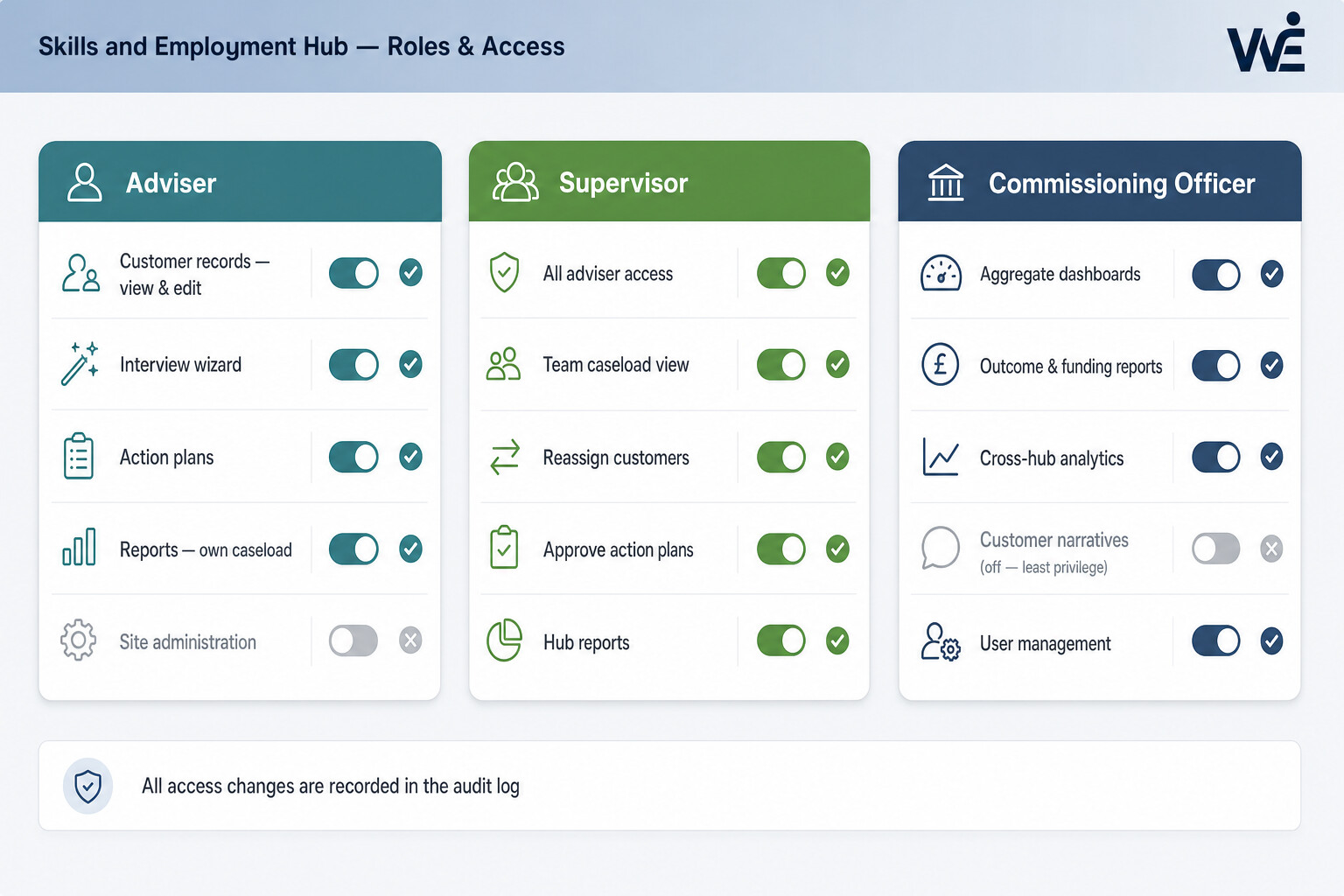
- Front-line advisers work from multiple borough hubs; managers and commissioners each need calibrated visibility without exposing sensitive narratives inappropriately.
- The authority began with an Access database—as a purposeful stop-gap—but ambition always pointed to browser-accessible tooling that could evolve with commissioning models.
- Most users are advisers first, technologists rarely; any workflow must reinforce empathy and pace instead of burying nuance beneath modal overload.
Collaborative delivery
Terrabase reverse-engineered spreadsheets, legacy Access artefacts, and field notes—then iterated an interactive prototype until Work Zones mentors recognised their language in the UX. Trials with draft builds fed pragmatic refinements ahead of rollout across hubs.
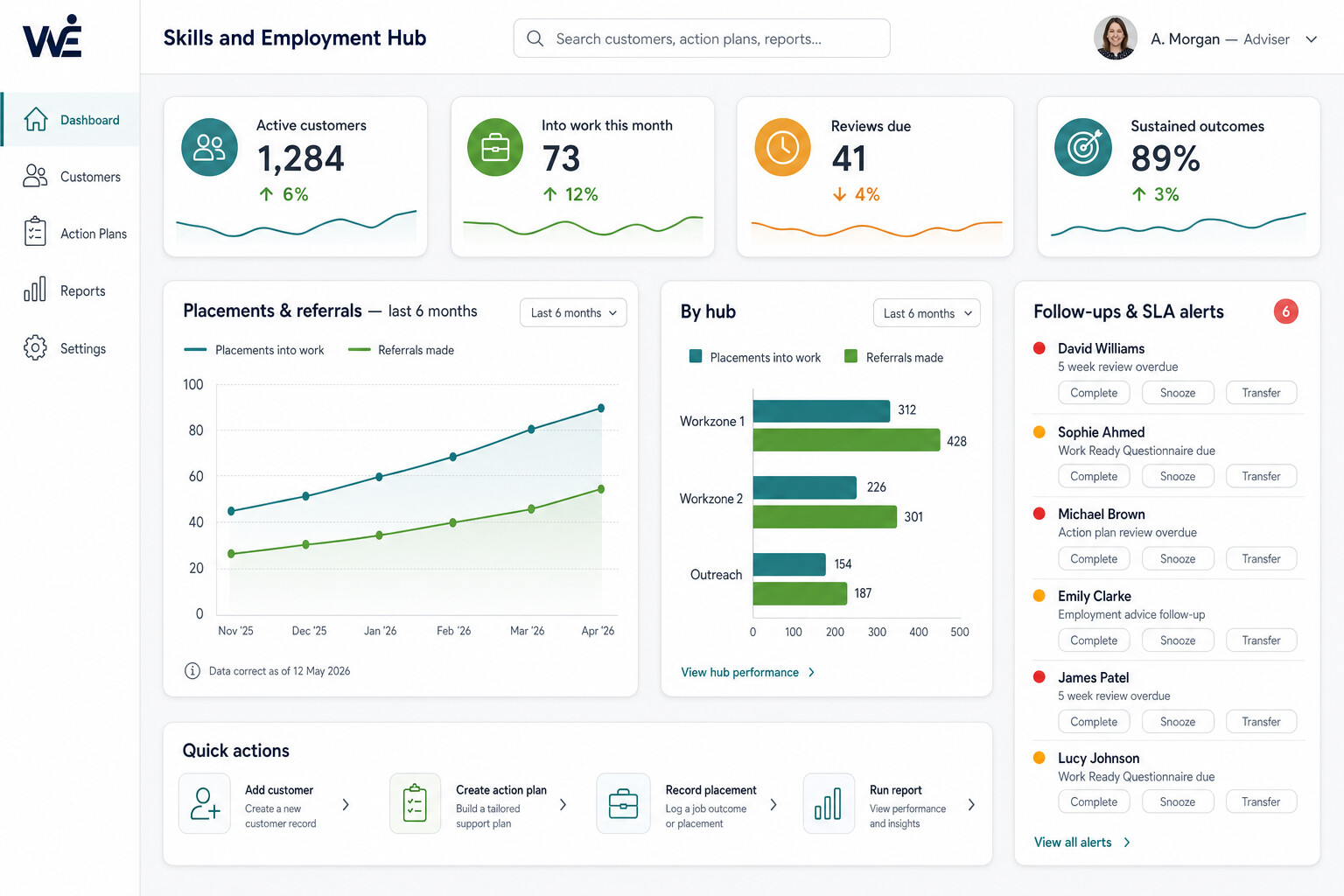
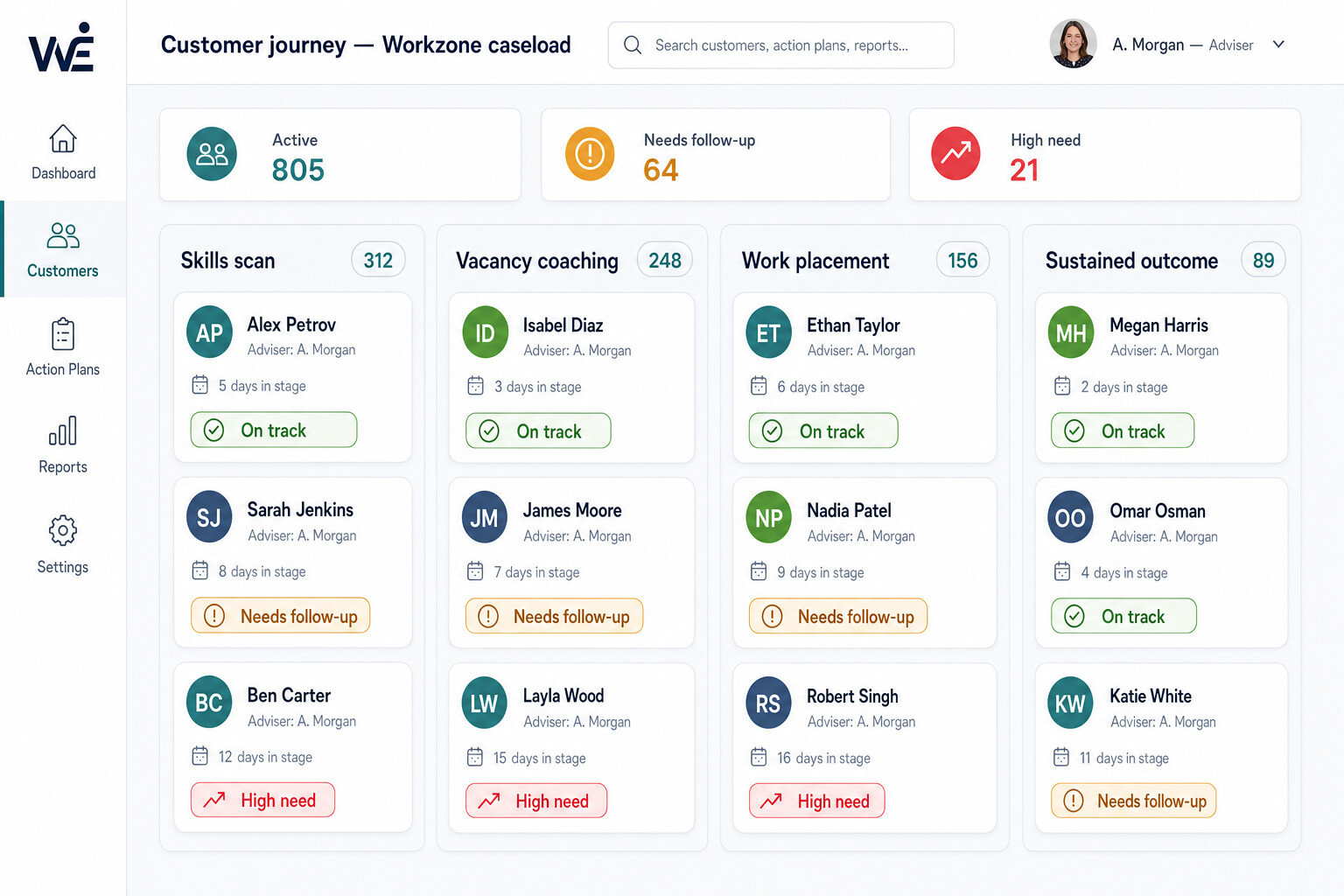
Seeing need, shaping action plans
Advisers classify customers across multi-step employability journeys—skills scans, vacancy coaching, placements, sustained outcomes—and escalate support where vulnerability intersects urgency.
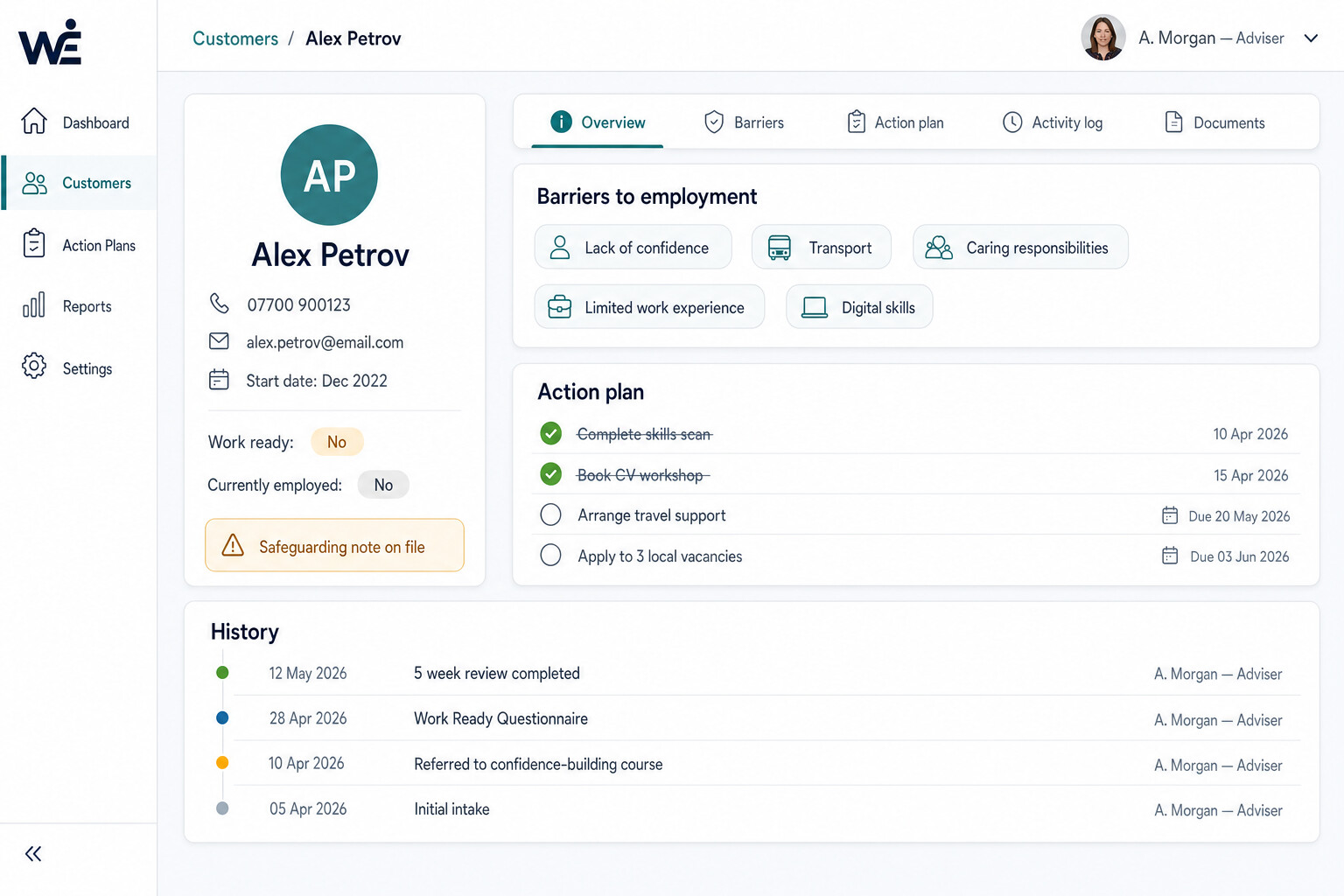
In-the-room capture
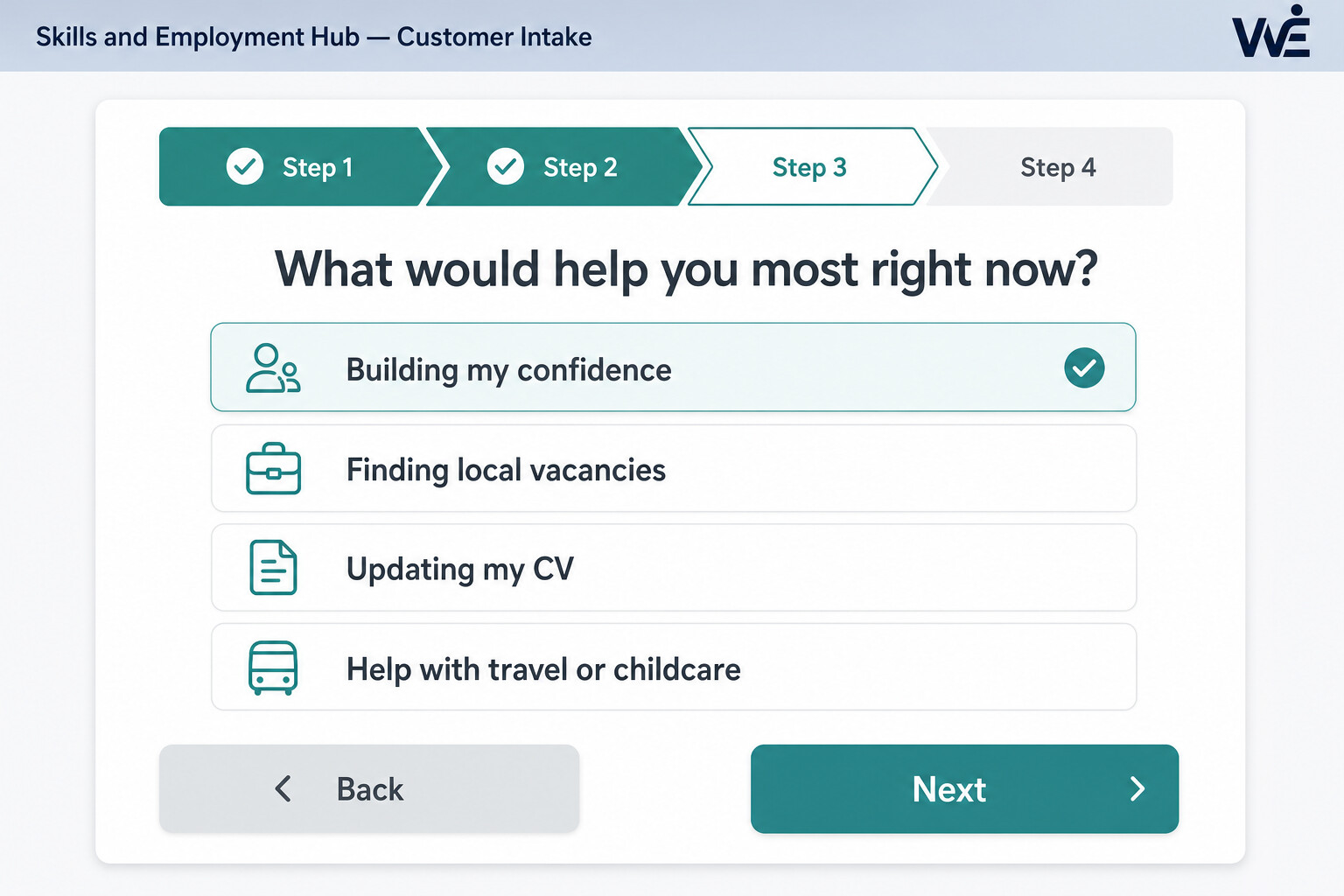
Today the bespoke platform runs full-time alongside interviews: unobtrusive prompts keep advisers present with humans while structured data silently lands exactly where auditors expect it later.
What we'd explore first Week 1–2 discovery · data you already have · sign-off criteria
Employability platforms succeed when advisers recognise their language in week one. We would spend early time in hubs, not only in workshops.
-
Weeks 1–2: Discovery
- Customer journeys from first contact through outcomes—and where urgency shows up
- How managers, advisers, and commissioners each need to see the same truth
- Multi-site habits, paper trails, and workarounds that hide risk today
-
Data you already have
- Legacy Access artefacts, spreadsheet trackers, and field notes worth preserving
- Interview templates and action-plan language advisers already use
- Reporting packs sponsors expect—even when assembled painfully by hand
-
What “good” looks like for sign-off
- One customer record advisers trust during live conversations
- Role-based access and audit-friendly delegation—not shared passwords
- Commissioner dashboards that tell a story without spreadsheet gymnastics
This is illustrative of how we begin—not a fixed statement of work. Every organisation gets a written discovery summary before build commitments.